Fleet maintenance
Review the truck’s history and driver reports before repairs. Keep completed work on record.
Service due and previous repairs
- 01
See what needs service
The office reviews service priorities alongside unknown baselines and stale readings for each unit. This distinguishes work needing attention from missing information, rather than treating an absent reading as a healthy truck.
- 02
Check previous reports and repairs
The internal mechanic reviews the previous available driver walkaround, recent repair records, and available active faults for the unit. Together they provide inspection context beyond the latest symptom, while mechanical judgment remains with the reviewer.
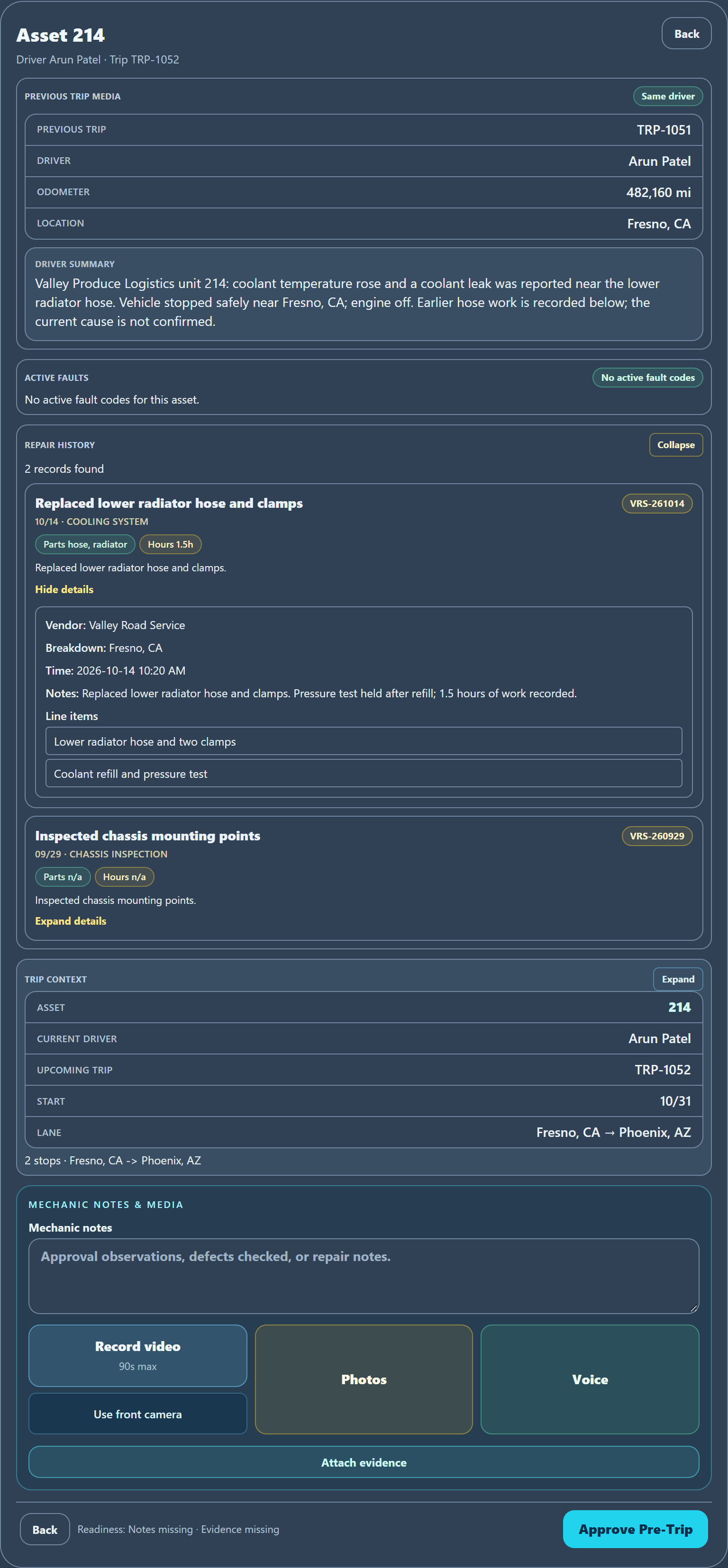
Previous driver evidence and repair history available during mechanic review.
Recorded work and repair history
- 03
Record service against the right schedule
Record completed work and supporting evidence against the unit, linking service to the relevant program when appropriate. Only an explicit program link credits that service interval, so unrelated repairs do not reset it.
- 04
Keep the repair history available
The recorded repair stays in the unit’s history for later shop review and roadside coordination. Subsequent reviewers can see what was recorded before deciding what to inspect, without treating past work as a diagnosis.
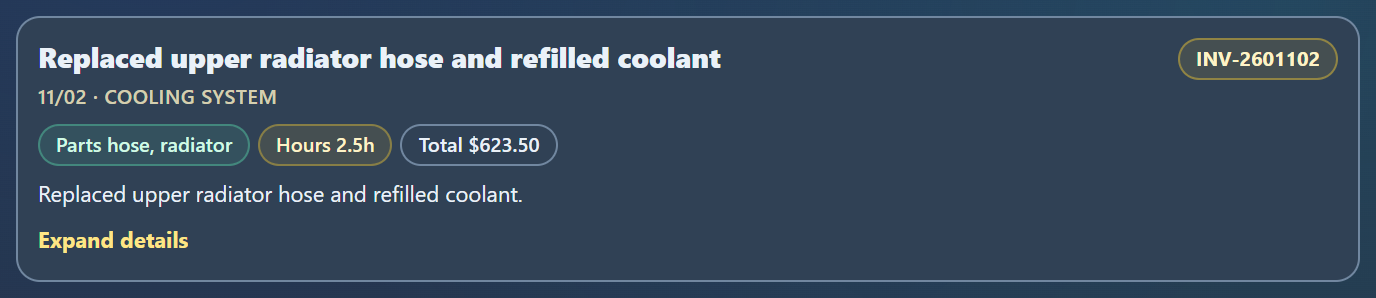
Parts, labor hours, and invoice total remain associated with the recorded repair.
Guidance supports qualified mechanics; it does not guarantee diagnosis, cost, safe driving distance, or compliance.